Imagine life as a journey. Some of us have a clear destination in mind – complete with a map, resources, and all the tools we need to get there. Others are more spontaneous, enjoying the journey without a fixed destination, ready for whatever adventure comes their way.
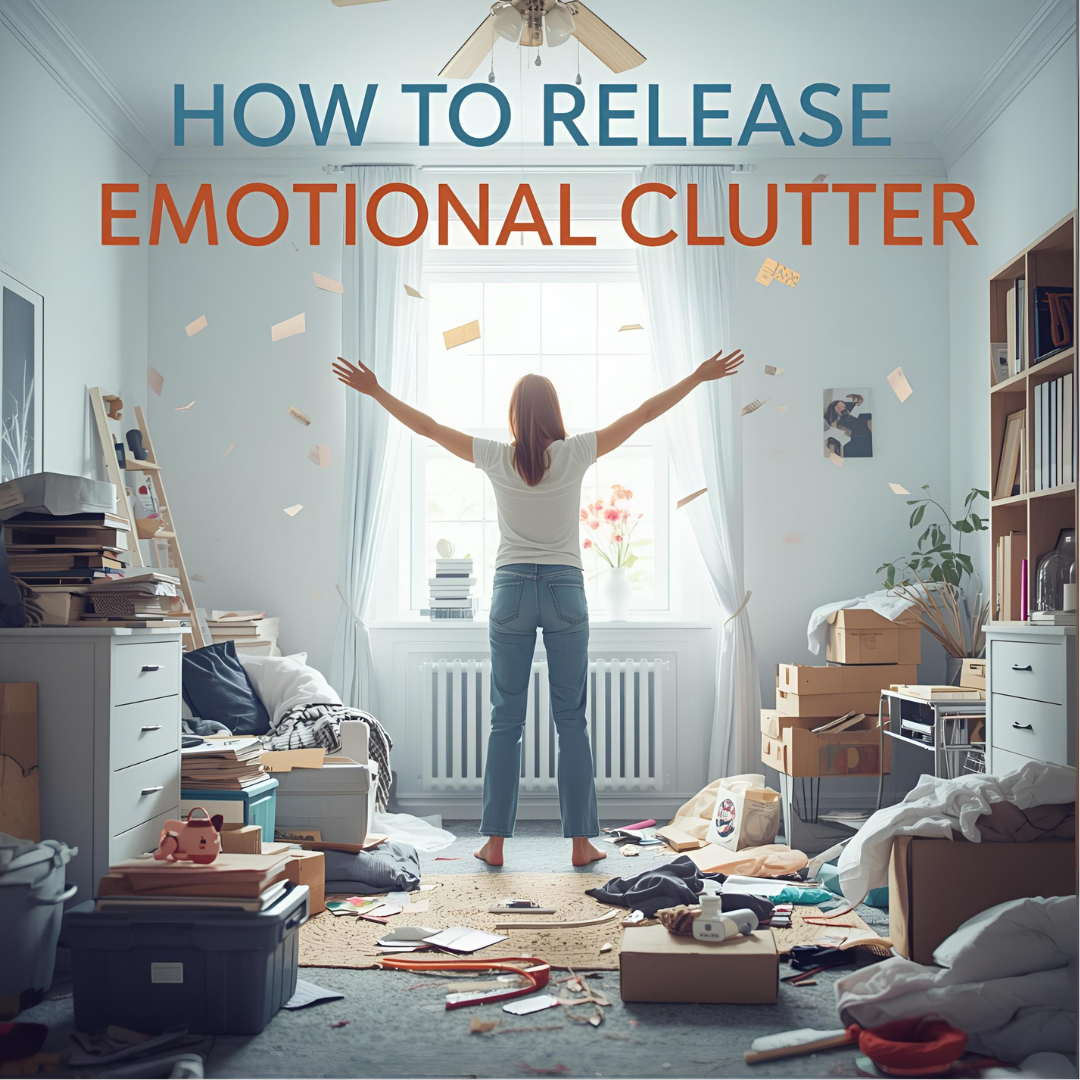
Along the way, we often encounter obstacles – some small, some large – that can either slow us down or change our course entirely. At times, these challenges can weigh us down, making the journey feel more like a struggle. Sometimes, they can even stop us completely, leaving us feeling stuck and unable to continue. This is what emotional clutter does to us.
In this article, I’ll share a process for how you can deal with the emotional clutter that may be keeping you from moving forward.
Step 1: Identify Your Emotional Clutter
The first step is to create a list of everything that’s weighing you down emotionally. Write down your worries, fears, anxieties, complaints, resentments – anything that comes to mind. Don’t rush. Take your time. Allow yourself a week to add to the list as new things come up.
The key here is to identify the clutter, not to wallow in it. The goal is to bring these feelings into your awareness so you can deal with them, not to get caught up in negative emotions. If you start to feel overwhelmed, take a break – go for a walk, take a nap, watch a show, or do something to reset. When you’re ready, come back to your list.
Honesty is important in this exercise. Some of the emotions you uncover may be uncomfortable, and you might even feel guilty about some of them, but that’s okay. The more honest you are, the more effective this process will be.
Step 2: How Would You Like to Feel?
Now comes the part that begins to clear away the negative energy: envisioning how you’d like to feel instead. For each item on your list, ask yourself how you would prefer things to be. How would you want to feel in this situation? What would you like the outcome to be?
Get into the feeling of it. Even if the situation is in the past and seems beyond your control, focus on how you would have liked things to go or how you want things to be now. The important part is to keep your language positive – focus on what you want, not what you don’t want.
This is your Well, What Do I Want? list. It’s your vision of how you’d like to feel, and it’s a crucial part of creating the positive change you’re seeking. Keep this list close, and remember that you can keep adding to it as your desires evolve.
Step 3: What “Could” You Do Now?
Now that you’ve identified how you’d like to feel, ask yourself: What could you do right now to start moving in that direction?
This isn’t about forcing yourself to take action – it’s about exploring what could be done. The key is to open up possibilities without pressure. You don’t have to do anything on your list, but you could.
As you go through your list, ask yourself what actions might help release those negative feelings and align you more with your positive intentions. Some items may be practical, like “ask for advice” or “hire a gardener.” Others may be more emotional, such as “forgive myself” or “write a letter.”
Make sure each possibility is something that would make you feel better, even if it’s just a little bit. By the end of this step, you may feel a renewed sense of purpose and motivation to take positive steps forward.
Step 4: Time for Action?
By this point, you’ve already taken some powerful steps toward emotional decluttering. The next step is to take action.
Which item on your list is the easiest to start with? Which one would be the most impactful? Choose the one that resonates most with you, and take that first step.
Remember, action is liberating. Even small steps can create significant shifts in how you feel. It’s about moving forward – no matter how big or small the steps are.
Step 5: Releasing Unconscious Emotions
In this step, we dive a little deeper. Sometimes, even after identifying and working through our conscious emotional clutter, we still feel stuck. This can be due to unconscious emotions that we may not even be aware of.
Becoming an Observer of Your Emotions
One way to release these deeper emotions is to become an observer of your own feelings. This means stepping back and watching yourself experience your emotions without judgment. You’re not trying to change them immediately or push them away. Instead, you’re simply observing them as they arise.
The concept of “being an observer” comes from Bill Harris’ book Thresholds of the Mind. He calls this practice “Finding the Witness,” and it’s all about detaching from your emotions and seeing them from a place of neutrality. As Bill Harris puts it:
“Part of you observes what is happening even as it happens. When you observe in this way, you feel as if you are standing outside yourself and observing how you’re feeling, what you are doing, and how you’re interacting with your environment.”
By observing your emotions, you begin to gain a better understanding of why you feel what you feel. You’ll start to recognize patterns and triggers that may have been influencing you without your conscious awareness. This understanding gives you more control and choice in how you respond to your emotions.
So, the next time you feel an emotional charge, take a moment to step back. Become the observer. What do you notice? How are you feeling? What can you learn from this moment?
By following these steps, you’ll begin to clear away the emotional clutter that may have been holding you back. You’ll gain clarity, release negativity, and move forward with a renewed sense of purpose.
Remember, it’s not about being perfect – it’s about becoming more aware and allowing yourself to release what no longer serves you. With each step, you’ll make progress toward a more peaceful, positive, and empowered version of yourself.
